Source Fish Cleaning Machine for Ribs, Ginger, and Fish Processing
Find 29 Fish Cleaning Machine models for ribs, ginger, and fish processing. Compare specifications including voltage, material, and capacity to select the right equipment for your facility.
Key considerations
Products List


Comprehensive Sourcing Guide
Strategic Sourcing Guide for Industrial Fish Cleaning Machinery
Understanding the Technical Landscape of Fish Processing Equipment
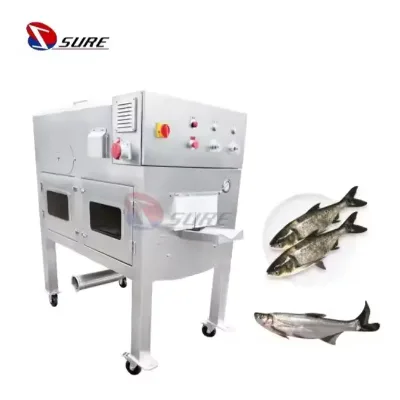
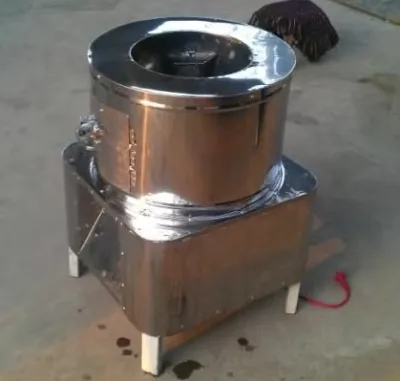
When sourcing a Fish Cleaning Machine, buyers must first navigate a complex technical landscape where terminology often overlaps with specific functional outcomes. The market offers distinct categories of machinery, ranging from general-purpose meat washing units to highly specialized seafood processing lines. In the current supply environment, specific models are identified by unique alphanumeric designations that correlate directly with their operational capabilities. For instance, the W-24R model is explicitly categorized as a Sapre Ribs Cleaning Machine, while the SY-800 is identified as a Fish Killing Machine with integrated scale removal functions.
The technical specifications for these machines vary significantly based on their intended application. The SY-800 unit, for example, operates with a capacity of 40 fish per minute and utilizes a power configuration of 3kw at 380V with a 3-phase power supply. Its physical footprint is compact, with standard dimensions listed as 590580930mm. In contrast, larger processing units like the XBF-126 and XBF-618 are designed for more intensive throughput, featuring weights of 280kg and 300kg respectively. The XBF-628 model, weighing 120kg, incorporates a separable tank and conveyor design, which is a critical feature for maintenance and sanitation protocols.
Power requirements are a primary constraint in the procurement process. The observed data indicates a consistent reliance on 380V electric power sources across multiple models, including the W-24R and SY-800. This standardization suggests that facilities must ensure their electrical infrastructure can support 3-phase industrial power. Furthermore, the XBF series machines utilize advanced working modes, such as all-round circulating water floating cleaning, which enhances the efficiency of residue removal. The XBF-618 model specifically features positive and reverse rotation with timing control, allowing operators to adjust the cleaning intensity based on the species and condition of the fish.
Compliance Standards and Certification Verification
In the realm of food processing machinery, compliance with international safety and material standards is non-negotiable. The primary material requirement for any Fish Cleaning Machine is the use of food-grade stainless steel to prevent contamination and ensure durability in wet, corrosive environments. The supplied product data confirms that several models, including the XBF-126 and XBF-618, are constructed from 304 Food Grade Stainless Steel. This specific alloy is the industry benchmark for food contact surfaces due to its resistance to rust and ease of cleaning.
Buyers must verify that the "Food Grade" designation is backed by material test reports from the supplier. While the provided data mentions CE certification as a background attribute, it is categorized as low-confidence and should not be assumed as a guaranteed standard for every listed product. Instead, procurement teams should treat CE marking as a target requirement to be confirmed during the supplier audit phase. The presence of CE certification implies adherence to European safety directives, but the absence of explicit confirmation in the product listing requires direct inquiry.
Additionally, packaging standards play a role in compliance. Several units, such as the SY-800 and XBF-126, are shipped in wooden cases or fumigation-free wooden boxes. This packaging standard is crucial for international shipping to prevent the spread of pests and to ensure the machinery arrives undamaged. The SY-800 specifically utilizes a fumigation-free wooden box packaging, which aligns with strict international phytosanitary regulations. Buyers should request documentation proving the wood treatment status to avoid customs delays upon arrival.
Cost Drivers and Pricing Variables
The pricing structure for fish cleaning machines is influenced by a combination of technical complexity, material quality, and production capacity. The observed price range in the market spans from $200 to $20,950, a wide variance that reflects the difference between basic cleaning units and fully automated processing lines. The SY-800 model, with its specific capacity of 40 fish per minute and 3kw motor, represents a mid-range investment in terms of functionality. Conversely, larger units like the XBF-618 with a 300kg weight and advanced conveyor systems likely command a higher price point within the observed range.
Material costs are a significant driver in this pricing spectrum. The use of 304 stainless steel is more expensive than lower-grade alloys, and the thickness of the steel used in the tank and conveyor systems directly impacts the final cost. Machines with features such as automatic discharging, adjustable rotating speeds, and extended conveyors for washing and selecting require more complex engineering and higher manufacturing costs. The XBF-628 model, despite its lower weight of 120kg, includes an extended conveyor design, which may influence its pricing relative to simpler models.
Minimum Order Quantities (MOQ) appear to be standardized at 1 unit across the observed data, suggesting that buyers can procure single units without needing to commit to bulk orders. This flexibility is beneficial for small to medium-sized processing facilities that are testing new equipment or have limited capital. However, buyers should be aware that shipping costs for heavy machinery, such as the 300kg XBF-618, can be substantial and may not be included in the base product price. The export packaging, typically a wooden case, adds to the overall logistics cost and must be factored into the total cost of ownership.
Operational Applications and Process Integration
Fish cleaning machines are designed to integrate into various stages of the seafood processing workflow, from initial slaughter to final cleaning. The SY-800 model is explicitly categorized for mild processing, indicating its suitability for delicate operations where the integrity of the fish skin and flesh must be preserved. This machine combines fish killing, scale removal, and gutting functions, making it a versatile unit for facilities that handle a variety of fish species. The W-24R model, while named a Sapre Ribs Cleaning Machine, also carries keywords such as "Meat Washing Machine" and "Ginger Cleaner," suggesting a broader application in general food processing beyond just seafood.
The cleaning form is another critical factor in application selection. The XBF series utilizes rotary brush cleaning, which is effective for removing surface debris and scales without damaging the fish. The XBF-618 features a design that allows for positive and reverse rotation, enabling operators to customize the cleaning action based on the specific requirements of the batch. This flexibility is essential for facilities that process different types of seafood, such as fish, shellfish, and other marine products, each requiring different levels of agitation and water circulation.
Thermal processing is another application area, as indicated by the HT-SY3J model, which is classified under thermal processing. This suggests that some machines in the market are designed to handle fish that require heat treatment during the cleaning or pre-processing stage. The XBF-628 model, with its separable tank and conveyor design, is particularly well-suited for facilities that require frequent cleaning and sanitation between batches. The mobility features, such as universal moving casters, allow for easy reconfiguration of the production line to accommodate different processing steps.
Supplier Evaluation and Product Verification
Evaluating suppliers for fish cleaning machinery requires a rigorous approach to verifying product claims and operational capabilities. The prod_origin data indicates that the majority of these machines originate from China, with specific mentions of Henan as a manufacturing hub for certain models. Buyers should verify the specific factory location and request a site visit or virtual tour to assess the manufacturing capabilities and quality control processes. The presence of customization options, such as the "Customized" attribute and "Customization: Available" status, indicates that suppliers are willing to tailor machines to specific client needs.
When evaluating a supplier, buyers should request detailed technical drawings and specifications for the specific model they are interested in. The XBF-618 and XBF-628 models, for instance, have distinct dimensions and weights that must be matched against the buyer's facility constraints. The SY-800 model's dimensions of 590580930mm and the XBF-126 dimensions of 280kg weight are critical data points for planning the installation space. Buyers should also verify the power requirements, ensuring that their facility can support the 380V, 3-phase power supply required by these machines.
Quality control is another vital aspect of supplier evaluation. Buyers should request sample videos or demonstrations of the machines in operation to verify claims such as "Easy Residue Rinsing Design" and "Automatic Discharging." The XBF-618 model's feature of "All-Round Circulating Water Floating Cleaning" should be demonstrated to ensure it meets the buyer's sanitation standards. Additionally, the XBF-628 model's "Extended Conveyor for Washing and Selecting" should be tested to confirm its efficiency in separating and cleaning fish.
Quality Control and Long-Term Procurement Considerations
Long-term procurement of fish cleaning machinery involves more than just the initial purchase; it requires a focus on maintenance, spare parts availability, and operational longevity. The use of 304 stainless steel is a positive indicator of durability, but buyers should verify the thickness of the steel and the quality of the welds to ensure the machine can withstand the harsh conditions of a fish processing plant. The XBF-618 and XBF-628 models, with their separable tank designs, offer advantages in terms of cleaning and maintenance, as the tanks can be easily removed for deep cleaning.
Buyers should also consider the availability of spare parts and the technical support provided by the supplier. The SY-800 model's 3kw motor and 380V power supply are standard components, but the specific brand and quality of these components can vary. Buyers should request a list of recommended spare parts and the lead time for their delivery. The XBF-618 model's timing control and reverse rotation features require precise calibration, and the supplier should provide training or documentation to ensure operators can maintain these settings correctly.
Finally, the environmental impact and energy efficiency of the machines should be considered. The XBF-618 model's "All-Round Circulating Water Floating Cleaning" design suggests a focus on water conservation, which is increasingly important in modern food processing. Buyers should inquire about the water consumption rates and the efficiency of the water recycling systems. The XBF-628 model's mobility features, including universal moving casters, also contribute to operational flexibility and energy efficiency by allowing for easy reconfiguration of the production line. By carefully evaluating these factors, buyers can ensure a successful long-term partnership with their supplier and a reliable, efficient fish cleaning operation.
FAQs
What power specifications do these fish cleaning machines require?
Most models operate on 380V electric power sources with 3-phase supply. The SY-800 unit specifically uses a 3kw motor configuration, ensuring compatibility with standard industrial electrical infrastructure.
Which materials are used to construct the fish cleaning equipment?
The machines are built using 304 Food Grade Stainless Steel to ensure durability and prevent contamination. This material choice meets food safety standards for wet and corrosive processing environments.
Can buyers customize the specifications of the fish cleaning machines?
Yes, customization is available for these units to meet specific client needs. Buyers can request tailored configurations for models like the W-24R or XBF series to fit unique operational requirements.
What is the minimum order quantity for purchasing these machines?
The minimum order quantity is one unit across the observed product range. This allows small to medium facilities to procure single machines without committing to bulk orders.
How are these machines packaged for international shipping?
Units are typically shipped in export wooden cases or fumigation-free wooden boxes. This packaging standard helps prevent pest spread and ensures machinery arrives undamaged during transit.
Which models offer advanced cleaning features like reverse rotation?
The XBF-618 model features positive and reverse rotation with timing control for adjustable cleaning intensity. This allows operators to customize the cleaning action based on the specific fish species being processed.